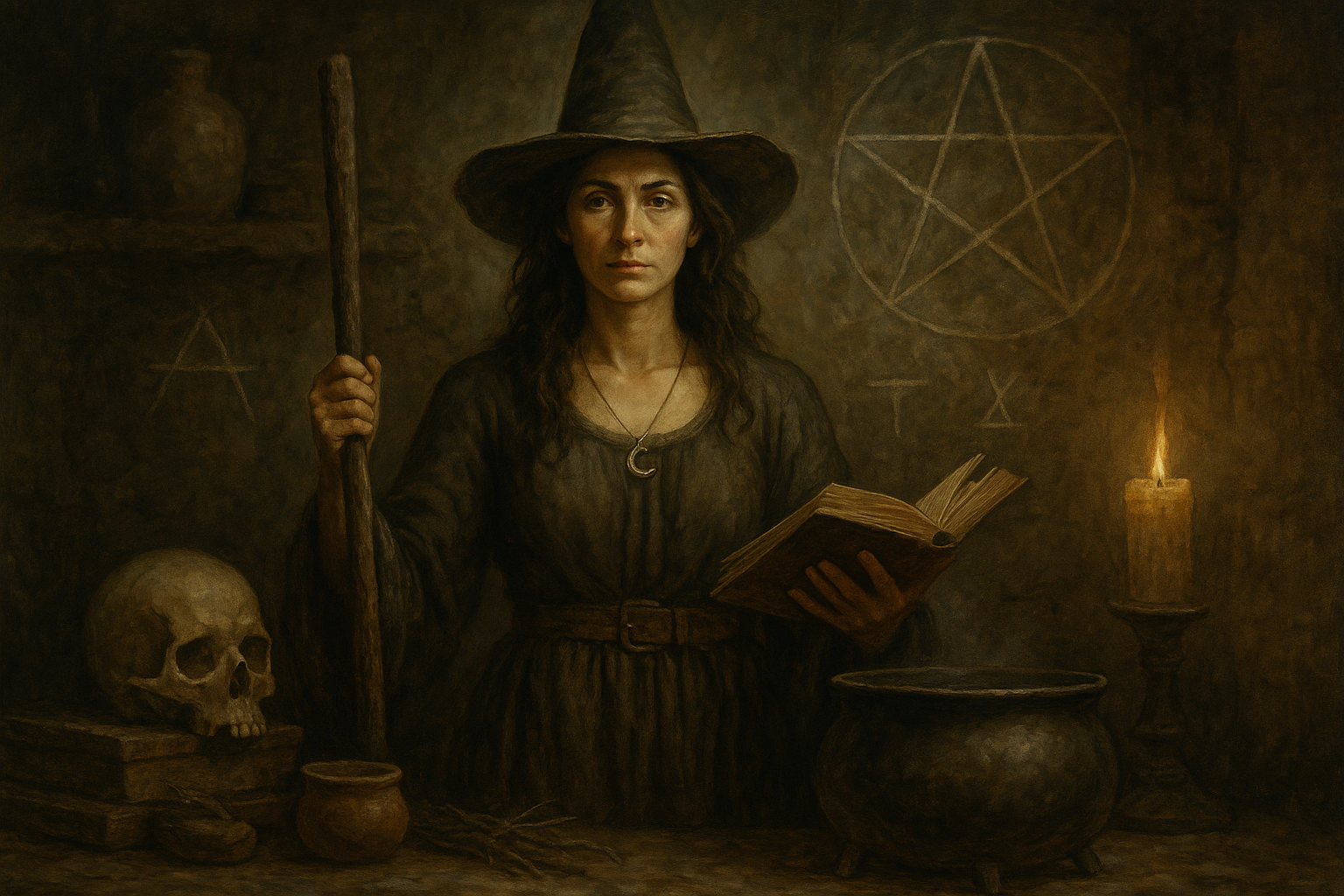
Witchcraft has fascinated humanity for thousands of years. It weaves together folklore, fear, faith, and the supernatural into one of the most complex and misunderstood chapters of our past. Today, many people view witchcraft as a spiritual practice or a nature-based belief system—but its history is far older, darker, and far more intricate than most realise.
Here’s a journey through the centuries, tracing how witchcraft evolved from ancient rituals to the symbol of mystery and power it is today.
Ancient Beginnings: Magic Before “Witches” Existed
Long before the word witch ever appeared, early civilisations practised forms of magic, ritual healing, and divination.
🜂 Mesopotamia & Babylon
Some of the earliest written records of magical practices come from clay tablets describing:
- Protection spells
- Healing rituals
- Spirit conjurations
- Ceremonies to banish evil forces
Priests and priestesses acted as intermediaries between humans and the supernatural world.
🜁 Ancient Egypt
Magic—called heka—was deeply respected. Egyptians believed every person possessed magical energy. Amulets, protection spells, and rituals were commonplace, used to:
- Communicate with deities
- Safeguard the dead
- Influence fate
Witchcraft wasn’t feared here—it was part of life.
🜄 Ancient Greece & Rome
Magic grew both revered and feared. Wise women, seers, and oracles used herbs, trance states, and divination.
At the same time, darker portrayals appeared in mythology…
Think Circe turning men into animals or Medea summoning spirits. These stories planted early seeds of suspicion toward female magic-users.
Medieval Europe: Fear, Religion, and the Birth of the “Witch”
As Christianity spread across Europe, older pagan traditions clashed with church doctrine.
Many folk practices—healing, herbalism, seasonal rituals—were suddenly rebranded as dangerous or demonic.
The Church’s Growing Fear
Witchcraft became framed as:
- Heresy
- Devil worship
- A threat to Christian order
By the 15th century, fear reached fever pitch.
The Witch Hunts
Between the 1400s and 1700s, tens of thousands of people, mostly women, were accused of witchcraft.
They were blamed for:
- Failed crops
- Sudden illnesses
- Bad weather
- Misfortune of any kind
This era produced infamous trials and tragedies, including:
- The German witch panics
- The Scottish witch trials
- The Salem Witch Trials in 1692
It was less about magic—and more about control, fear, and social tension.
Witchcraft in the Shadows: Survival and Transformation
Despite the brutality of the witch hunts, old traditions didn’t disappear.
Folk healers, midwives, and practitioners continued their craft quietly, passing down knowledge through families and secret circles.
These remnants evolved into:
- Herbal medicine
- Folk magic
- Divination practices
- Protective charms
The “witch” transformed from a feared monster into a misunderstood figure rooted in ancient wisdom.
The 20th Century Revival: Witchcraft Reborn
In the mid-1900s, witchcraft resurfaced in a new light.
Gerald Gardner and Wicca
Gardner claimed to have encountered surviving witch covens and helped bring witchcraft into the modern world through Wicca—a nature-based spiritual tradition that emphasises:
- Earth energy
- Seasonal cycles
- Ritual magic
- Personal empowerment
This sparked a global movement.
Modern Witchcraft Expands
Today, witchcraft includes:
- Traditional witchcraft
- Hedge-witchery
- Green magic
- Chaos magic
- Ritual spellwork
- Spiritual mediumship
- Energy work
It has become a symbol of empowerment, spirituality, and connection to the unseen.
Witchcraft in Paranormal Culture
For paranormal investigators, witchcraft holds a special place. Many believe:
- Ritual sites carry energy
- Magical practices can thin the veil
- Objects used in spellwork retain imprints
- Ancient rites leave residual or intelligent spirits behind
The line between witchcraft and the supernatural has always been blurred—making it a powerful part of modern paranormal exploration.
From Feared to Celebrated
Witchcraft has travelled a long path:
- From ancient sacred practice
- To misunderstood and persecuted tradition
- To modern spiritual revival
Whether viewed as magic, religion, folklore, or energy work, witchcraft remains one of the most compelling and mysterious threads in human history.
And its story is far from over.
AI vs the Afterlife: Can Artificial Intelligence Talk to the Dead?
The rise of artificial intelligence has reshaped almost every part of our world — from ... Read more

Science Isn’t as Advanced as We Think — And Understanding It Makes That Clear
We live in a world surrounded by technology that feels futuristic. Smartphones answer questions in ... Read more